We called dozens of Belgian garages. 8 in 10 didn’t pick up.
This summer, we dialled dozens of independent garages across Belgium, during business hours, like any motorist would. Not to sell anything: to find out who picks up. Here are the numbers — and what they mean for your workshop.
Contents
What we did, exactly
The method fits in three lines. We picked independent garages — around Brussels, in Wallonia, a few addresses in Flanders — and called them in the middle of the day, on weekdays, between 9 am and 5 pm. One call per garage, from an ordinary mobile, no hidden number.
When someone picked up, we apologised for dialling the wrong number, and that was that. When nobody picked up, we noted: how many rings, voicemail or not, the option to leave a message or not, a callback within 24 hours or not.
Honesty about the method: a few dozen calls is not a statistical study, it’s a field sample. We don’t publish decimals. But when a result is this clear-cut, the margin of error doesn’t change the conclusion — and you can redo the test yourself in an hour.
The result: 80% of calls unanswered
Eight calls out of ten never reached a human being. In detail: most rang out to the end; some landed on voicemail — often the operator’s default one, never configured, sometimes full; a few lines were busy.
Yet that’s not the number that struck us most. It’s the absence of callbacks. Logical: no message, no callback possible. But put yourself in the motorist’s shoes for a second. To him, that garage simply didn’t answer — and he’ll never know you were under a lift, doing your job.
Why nobody picks up — and why it’s nobody’s fault
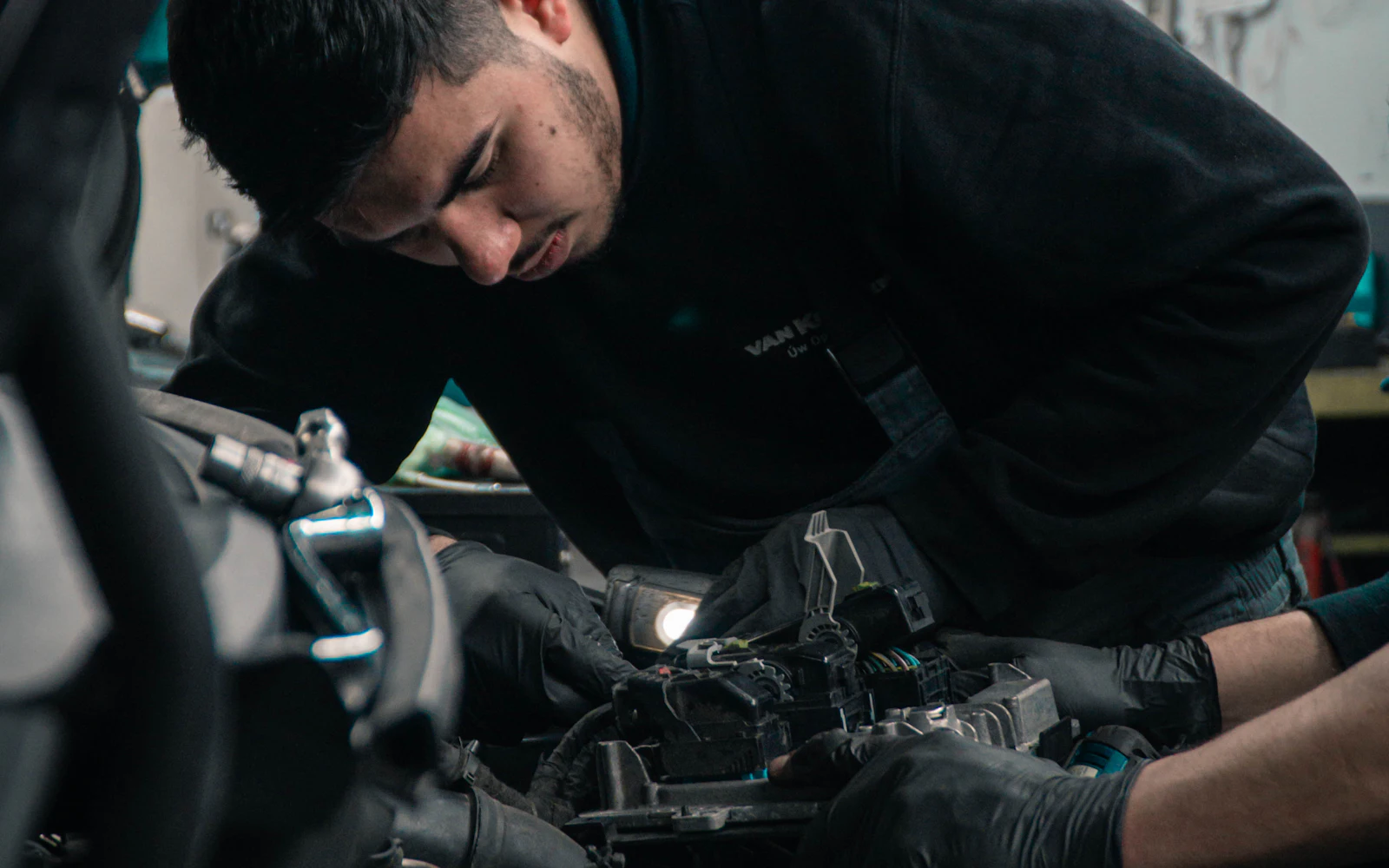
That 80% doesn’t say garage owners work badly. It says exactly the opposite: they work too hard to be able to pick up. Walk through an ordinary workshop day. At 8 am, customers drop off their cars and each wants two minutes of explanation. At 9 am, you’re under the first lift; the phone is in the office, fifteen metres and one door away. Your hands are covered in grease — the screen wouldn’t survive it. At the counter, someone is waiting for their invoice while a supplier holds on the other line.
In a garage, everyone has a trade: mechanic, body worker, service adviser when there is one, an owner who is often all three at once. Answering the phone is nobody’s trade. And hiring someone just for that costs a full salary, employer charges included — out of reach for most independent workshops. So the phone rings into the void, not out of neglect, but out of triage: the car on the lift always wins.
What a missed call really costs
Who calls a garage at 10 am on a Tuesday? Not robots: customers. Either someone who wants a slot — servicing, tyres, a check before the roadworthiness inspection —, or someone with a problem: a warning light, a car that won’t start, a breakdown on the road.
Do the maths with your own prices. An oil change with filter: around €150. A full service: €300 to €500. Brake pads and discs: the same order of magnitude. A timing belt, a clutch, a gearbox: past a thousand euros, sometimes three. And behind the first invoice comes the rest — a satisfied motorist comes back every year, and brings their partner’s car along.
A missed call is therefore not an inconvenience: it’s a job that goes somewhere else. One a day is enough for the month’s lost revenue to exceed, by far, the cost of any phone answering service.
“They’ll call back” — no, they don’t
It’s the objection we hear every time, and it was probably true when your garage was the only one for ten kilometres. Your 2026 customer has Google open in front of them: the map shows six workshops less than fifteen minutes away, each with its number. If they land on your voicemail, they don’t leave a message — they tap the next number.
For a breakdown, it’s even more brutal. The motorist stranded at the roadside calls down the list, in order, and the first garage that picks up gets the tow — then the repair, then the customer.
Three ways to win those calls back
If you run a workshop, you have three realistic options.
- Hire someone for the front desk. The best customer experience, and the most expensive: a full salary for a role that’s only useful during opening hours. Worth it for large operations, rarely for an independent.
- A classic telephone answering bureau. Human operators answer in your place and take messages, billed per call. Already better than voicemail. The limit: they don’t know your lifts, your job durations or your diary — they take notes, you call back, the work is done twice.
- An AI receptionist. She picks up within seconds, 24/7, knows your services and your schedule, books workshop appointments during the call and transfers emergencies straight to your mobile. Fixed monthly cost, no salary.
The third option is what we’re building: her name is Janet, and here is in detail what she does for a garage. Let’s be transparent — Celya sells this solution, so this article isn’t neutral. The test at the beginning, however, completely is: redo it. Call ten garages near you, on a Tuesday at 10 am, and count how many pick up.
What to remember
- In the middle of the day, 80% of the garages we called didn’t pick up — and didn’t call back.
- It’s not a lack of professionalism: in a workshop, answering the phone is nobody’s trade.
- Every incoming call puts €300 to €3,000 of work at stake, plus the value of the customer who returns.
- A customer who gets no answer doesn’t call back: they call the next garage on the map.
- The real question isn’t “who picks up?”, but “what happens when I can’t pick up?”. If the answer is “nothing”, you’re already paying — without seeing it.
Read next
Hear what your customers could be hearing
Janet picks up within seconds, in French and Dutch. She’s an AI, and she says so herself. Call her, judge for yourself.
Our AI receptionist · +32 460 25 44 13. She picks up within seconds.
← All articles The phone answering service for garages → Phone reservations in restaurants →